
Moisture Barrier vs. Full Crawl Space Encapsulation: Which Does Your Home Need?
If a home inspector or contractor has told you that your crawl space has a moisture problem, you've probably heard two solutions thrown around: a moisture barrier and a full encapsulation. They sound similar, they both involve lining the crawl space, and they can differ a lot in price — so it's fair to wonder which one you actually need.
Here's a straightforward breakdown from our team, including how we decide which moisture control solution to recommend for any given home.
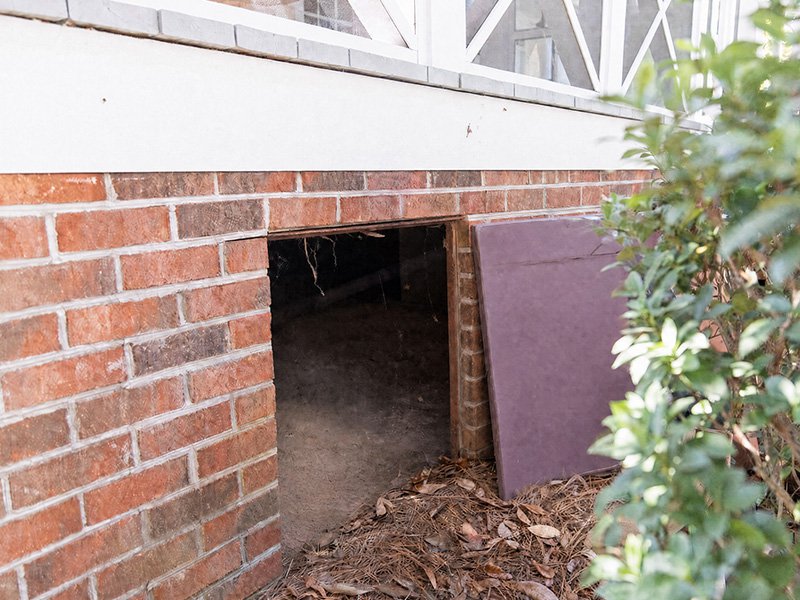
What Is a Moisture Barrier?
A moisture barrier is a plastic liner laid over the floor of your crawl space to prevent moisture from rising from the soil. It's the more targeted, cost-effective option, and it comes in two thicknesses:
6-mil liner — a clear liner secured with steel stakes. This is the standard barrier.
14-mil liner — a thicker white liner secured with galvanized spikes. It's more durable, lasts longer, and looks cleaner under the house.
With a moisture barrier in place, the crawl space is not sealed off, and no dehumidifier is installed. You're blocking ground moisture — nothing more, nothing less. For many homes, that's exactly what's needed.
What Is a Full Crawl Space Encapsulation?
A full encapsulation is a more complete system used when the crawl space needs greater moisture and humidity control. It includes:
- A 14-mil liner across the crawl space floor
- A 12-mil liner on the walls and piers
- A custom-built crawl space door to seal the space
- A properly sized dehumidifier, when needed, to help control humidity
Encapsulation is the right call when the crawl space needs to be sealed and humidity controlled, not just covered. When moisture is an ongoing, active problem, a barrier alone may not be enough.
Moisture Barrier vs. Encapsulation: The Short Version
A moisture barrier blocks ground moisture with a floor liner (6-mil or 14-mil), leaves the crawl space unsealed, uses no dehumidifier, and typically takes 1–2 days to install. It's the cost-effective choice when there's no active water problem.
A full encapsulation creates a more controlled crawl space. It uses a 14-mil floor liner plus a 12-mil liner on the walls and piers, seals the space with a custom door, and may include a dehumidifier to help control humidity year-round. It typically takes 4–6 days and is often the better choice for ongoing moisture problems.
How Do You Decide Which One a Home Needs?
Every crawl space is different, so the recommendation comes down to what's actually happening under the house — and, surprisingly to many homeowners, the time of year we inspect it.
Drainage Usually Comes First
If the crawl space is below grade or shows signs of rainwater entering and pooling, the first step is usually French drainage and a sump pump — not a liner. There's no point lining a crawl space that's still taking on water.
Once the water problem is handled, a barrier or encapsulation can do its job.
When Encapsulation Is the Stronger Recommendation
If ductwork or the crawl space layout restricts airflow enough to leave areas persistently humid, a moisture barrier alone may not be enough. In those cases, Harris may recommend full encapsulation to create a more controlled environment.
And in the warmer months — roughly July through October — if the ductwork, floor joists, or subfloor are visibly sweating and dripping, or insulation is holding water and falling, full encapsulation is often the stronger recommendation. Those are signs that excess moisture is actively affecting the crawl space, rather than evidence of a problem that happened months ago.
Why the Season Matters More Than You'd Think
Here's something a lot of homeowners don't realize: the same crawl space can tell two very different stories depending on when you look at it.
If we inspect a home from November through June and see signs of past moisture — such as wood damage or water marks — but nothing is actively wet, we may not have enough evidence to recommend a full encapsulation right away.
In those cases, the honest recommendation may be to quote both options and revisit the crawl space during the warmer months, when we can see whether the moisture problem becomes active before you invest in the bigger system.
Buying or Selling a Home?
If you're dealing with a real estate transaction, there's one more thing worth knowing.
In South Carolina, wood-moisture readings of 20% or higher are reported as excessive moisture conditions on the CL-100. Wood-destroying insect inspections are also commonly required for certain real estate transactions, including VA loans. A moisture barrier is one common way to address elevated crawl space moisture, depending on what the inspection finds.
The Bottom Line
Moisture barrier — a cost-effective way to block ground moisture when there's no active water intrusion.
French drainage + sump pump — usually the first step when rainwater is getting in or the crawl space sits below grade.
Full encapsulation — a more complete solution when moisture is active and the space needs greater humidity control.
The most reliable way to know which one your home needs is to have someone look under the house — ideally, when the conditions contributing to the problem are actually present.
Get a Free Crawl Space Inspection
Harris Pest Control has been solving crawl space moisture problems across the Pee Dee and the Grand Strand for over 50 years.
If you're not sure whether you need a moisture barrier, full encapsulation, or drainage first, we'll take a look and honestly tell you what your home needs.
Call (843) 665-4325 or request your free inspection.
Additional Services














Get Started Today!