
Termites Swarming in Your House? A Pee Dee & Grand Strand Guide
If you’re seeing winged termites flying around your home in Florence, Myrtle Beach, or elsewhere across the Pee Dee and Grand Strand, take a breath — but don’t ignore it.
Every spring, homeowners across this region call Harris Pest Control after noticing insects suddenly gathering around windows, lights, or doorways. In many cases, those insects turn out to be subterranean termite swarmers.
Thanks to our warm, humid climate, subterranean termites are extremely common in coastal and inland South Carolina, and swarming is often the first visible sign homeowners notice. Sometimes a few swarmers drift inside from outdoors. But if you’re seeing large numbers indoors or finding piles of shed wings, it can indicate a colony may be active somewhere in or around the structure.
Harris Pest Control has been protecting homes in the Pee Dee and Grand Strand since 1973, and helping homeowners identify termite activity is something our technicians deal with every day. If you’re unsure what you’re seeing, the best course of action is to schedule a professional inspection.
If you're curious about when termite swarms usually happen locally, we also covered that in a recent article: When Termites Swarm in the Pee Dee and Grand Strand
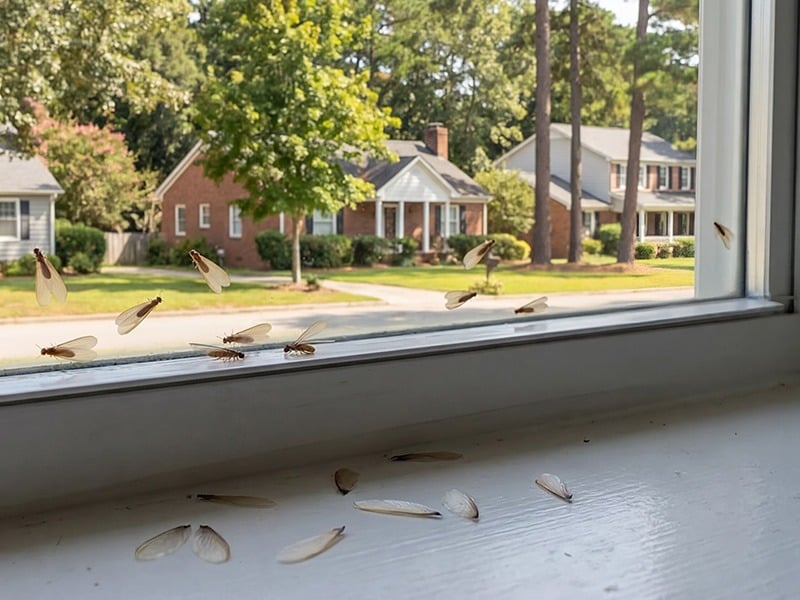
Do Swarming Termites Mean I Have an Infestation?
Subterranean termites live underground in the soil. In our region, warm temperatures, humidity, and sandy coastal soils create ideal conditions for large termite colonies.
When a colony matures, it produces winged reproductive termites called swarmers (or alates). Their job is to leave the colony, fly briefly, shed their wings, and attempt to start new colonies nearby.
When homeowners see swarmers indoors, it typically happens for one of two reasons:
- Higher concern: The swarm originated from a colony already feeding on the structure.
- Possible but still worth checking: Swarmers entered through small gaps and were attracted to indoor lights.
The important thing homeowners should know is that the swarmers themselves are not what cause structural damage. Worker termites — which remain hidden inside wood or underground — feed on wood and cause damage over time.
If termites are already active in a structure, the swarm may simply be the first visible sign that something has been happening out of sight.
This is why homeowners who notice swarmers indoors often choose to have a professional termite inspection performed to confirm whether termites are active in the structure.
For other evidence of termite activity, this article will be helpful: Signs of Termites
Termite Swarmers vs. Flying Ants
Pee Dee and Grand Strand homeowners often mistake termite swarmers for flying ants, especially when insects appear around windows or lights.
A few quick differences can help.
Wings
- Termites have four wings that are roughly equal in size.
- Flying ants have front wings that are longer than their back wings.
Body shape
- Termites have a straight, uniform body shape with no narrow waist.
- Ants have a clearly pinched waist.
Antennae
- Termite antennae are straight or slightly beaded.
- Ant antennae bend at an elbow.
Even if you're unsure what you saw, swarmers appearing indoors are worth having inspected.
Where Homeowners in the Grand Strand & Pee Dee Usually Find Swarmers
Because swarmers are attracted to light, homeowners often notice them in visible areas of the home.
Common places include:
- Window sills
- Sliding glass doors
- Around light fixtures
- Near vents and baseboards
- In spider webs near windows
- On floors near exterior doors
You may also notice small piles of clear wings, which swarmers shed shortly after landing.
Inside homes, swarmers often appear near windows or doors because they are drawn to light sources.
How Long Do Termite Swarms Last?
Termite swarms are usually brief events. In many cases they last only a few minutes, although homeowners may continue seeing dead swarmers or shed wings for several days afterward.
Even if the swarm stops, that does not mean the termite colony has disappeared. Worker termites can continue feeding inside wood structures year-round.
Does a Termite Swarm Always Mean an Infestation?
Not always, but it’s a strong enough warning sign that it should be taken seriously.
A few stray swarmers can occasionally enter a home from outside. However, certain signs are more commonly associated with termite activity within or around the structure.
These include:
- Large numbers of swarmers indoors
- Repeated sightings over time
- Piles of shed wings
- Swarms emerging from vents, baseboards, or walls
Termite damage often progresses quietly, and many homeowners do not discover activity until months or years after it begins.
That’s why confirming the situation early is important.
What To Do If Termites Are Swarming Indoors
If you notice termites swarming inside your home in the Pee Dee and Grand Strand, the most important step is to schedule a professional termite inspection with Harris Pest Control.
Swarming indoors can indicate that a subterranean termite colony is active somewhere in or around the structure, and the sooner the situation is evaluated, the better.
Before your inspection, it can help to make a quick note of what you observed and share it with your technician.
For example:
- Which room the swarm appeared in
- Whether insects were near windows, doors, or lights
- If you noticed discarded wings on window sills or floors
- Whether you’ve seen activity more than once
These details can help a technician determine where swarmers may have originated and inspect the most likely areas of the structure.
A professional inspection will determine whether termites are active and what treatment options are appropriate for your home.
Schedule a Termite Inspection in the Pee Dee or Grand Strand
If you’ve seen termites swarming inside your home, it’s best not to wait and see if the problem goes away.
Local, family-owned Harris Pest Control has protected homes across the Pee Dee and Grand Strand for 50+ years, serving communities including:
Our local pest control specialists can inspect the structure, identify potential risk factors, and recommend a termite protection plan tailored to your home.
Learn more about our termite control options or simply reach out today to schedule your termite inspection!
Frequently Asked Questions About Termites Swarming Indoors
How do termite swarmers get in my house?
They were likely already inside—swarmers are the winged reproductive termites from an established, mature colony. If swarmers are emerging from walls voids or other indoor areas, it typically means a colony is inside your home.
What happens to termite swarmers after they land?
After swarmers land, they shed their wings and search for a suitable place to start a new colony. If a male and female pair successfully find moisture and soil contact, they may begin establishing a new subterranean termite colony.
Can termite swarmers start a colony inside a house?
It’s uncommon but possible if conditions allow access to soil and moisture. Subterranean termites require soil contact to survive, so most successful colonies begin in the ground outside the structure and later move into wood.
Do termite swarmers bite people or pets?
Termite swarmers do not bite people or pets and are not considered a health threat. Their presence is primarily a concern because it may indicate termite activity in or near the structure.
Additional Services













Get Started Today!