
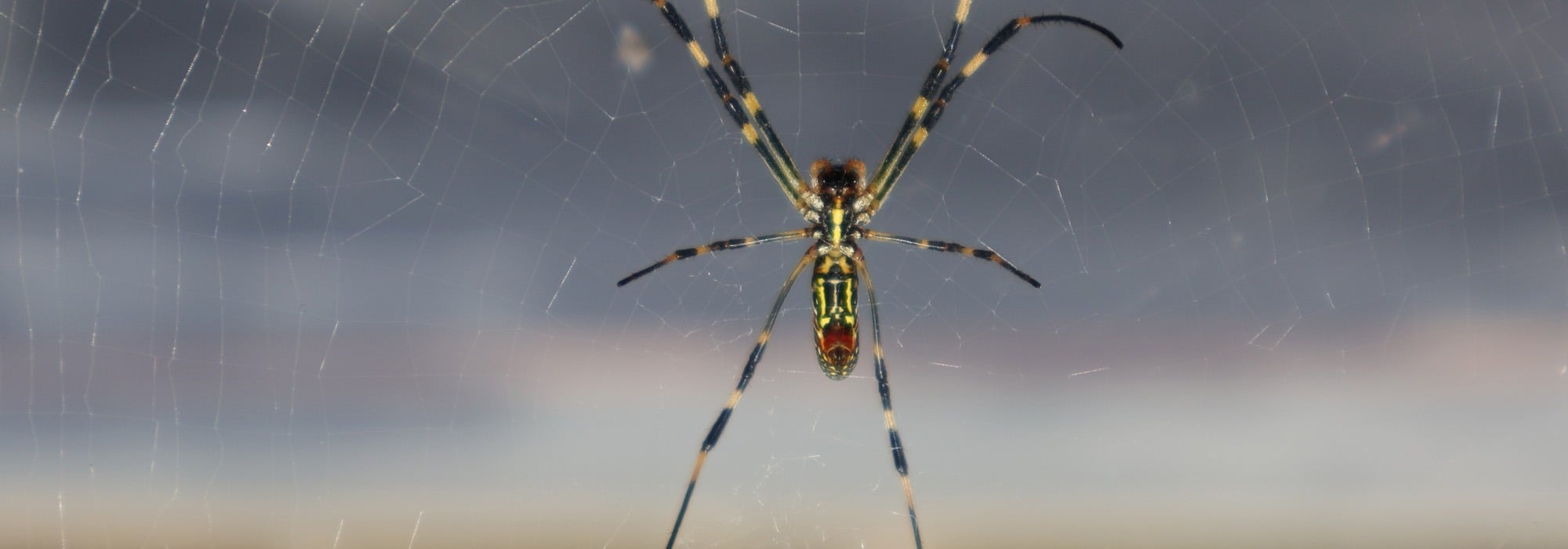
What do orb-weaver spiders look like?
The orb-weavers most likely to get your attention in eastern South Carolina are usually large, colorful females. Depending on the species, their bodies may measure from about 1/2 inch to 2 inches long, with the males being much smaller. Their rear body section may be round, oval, elongated, or even spiny, with markings in yellow, orange, black, white, silver, or brown.
Some of the more noticeable orb-weavers in South Carolina include:
-
The yellow garden spider, also called the writing spider, has a bold black-and-yellow body and often sits over a white zigzag woven into its web.
-
The banded garden spider has narrow yellow, white, and black bands across its body.
-
The golden silk orb-weaver, often called a banana spider in South Carolina, has an elongated yellow body, brush-like tufts on parts of its legs, and silk with a golden color.
South Carolina also has smaller and less colorful orb-weavers, so size and color alone may not be enough to identify one.
One quick note about Joro spiders: they are a non-native relative that can look similar to the golden silk orb-weaver. Joro spiders are established mainly in South Carolina’s Upstate, but they are not yet common here in the Pee Dee and Grand Strand. Female Joro spiders have horizontal silver bands across the body and a reddish marking underneath. Golden silk orb-weavers do not have those silver bands and have distinctive brush-like tufts on their legs.
The web is often the best identification clue. Orb-weavers get their name from the large, round, wheel-shaped webs they build.
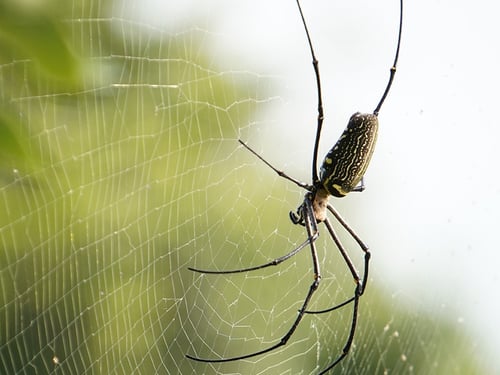
When are orb weaver spiders most active?
Young spiders begin emerging in spring, but they are initially small and easy to miss. They spend the spring and summer growing as insect activity increases around them.
By August, many orb-weavers—and their webs—are large enough to be hard to overlook. Activity is usually most noticeable from August through October, when mating and egg-laying are also underway.
Most adults die after cold weather or the first significant frost. Their egg sacs remain protected through the winter, and the next generation emerges in spring. Exact timing can vary by species and weather conditions.
Are orb-weaver spiders dangerous to humans?
The good news is that orb-weavers are not considered dangerous to people.
Like most spiders, they have venom that helps them subdue insect prey. However, the orb-weavers commonly found around South Carolina homes are docile and would rather retreat or drop from their webs than bite.
Bites are uncommon and are most likely to happen when a spider is picked up, squeezed, or trapped against the skin. If a bite does occur, it may cause temporary pain, redness, itching, or swelling around the area.
Contact a healthcare professional if symptoms become severe or continue to worsen.
What do orb-weaver spiders eat?
Orb-weavers eat many of the insects people would rather not have flying, and in some cases, crawling around their homes and yards. Their prey may include moths, flies, gnats, mosquitoes, ants, beetles, wasps, grasshoppers, and occasionally other spiders.
When something becomes trapped, the orb-weaver feels the vibrations moving through its web. It then approaches the prey and may bite it, wrap it in silk, or do both before feeding.
That makes orb-weavers beneficial predators, although they should not be considered a complete solution for mosquitoes or other pest problems.
Where do orb-weaver spiders build webs?
Think open spaces with plenty of insect traffic and two or more sturdy places where a web can be attached.
In yards, orb-weavers commonly build between shrubs, tall grass, tree branches, garden plants, fences, and the edges of wooded areas. Around homes, webs often appear between porch railings, deck posts, roof eaves, light fixtures, and other exterior features.
Their webs may stretch several feet between plants, tree branches, porch posts, and other sturdy objects. Many orb-weavers repair or replace damaged portions regularly, often overnight.
Exterior lights are especially attractive locations because the lights draw moths, flies, and other insects directly toward the spider’s web.
Orb-weavers are primarily outdoor spiders and rarely establish themselves inside homes. One may occasionally wander into a garage or shed or come through an open door or damaged screen, but that is not their normal behavior.
What should I do if I see an orb-weaver spider?
A single orb-weaver in the garden or another out-of-the-way area is usually not a concern. However, webs across porches, walkways, doors, and outdoor seating areas can quickly become a nuisance.
If you are finding multiple webs, cannot safely reach them, or keep seeing new webs in the same places, it may be time for professional help. Recurring activity often means the area provides plenty of insects and convenient places for spiders to build.
Harris Pest Control can inspect the areas where spiders are active, remove exterior webbing up to 15 feet, and help reduce the insects attracting them to your home.
How do I get rid of orb-weaver spiders?
Orb-weavers and other spiders are best addressed as part of an ongoing residential pest control plan. Removing a spider or its web may provide temporary relief, but it does not address the insects attracting new spiders to your home.
Harris Pest Control’s home pest control plans target those underlying pest pressures while keeping your home’s exterior clear of accessible spider webs. The plan includes quarterly exterior pest treatments, interior service as needed, coverage for spiders, and exterior spider de-webbing up to 15 feet.
Plans start at $39 per month, plus an initial service fee, and are backed by our 100% satisfaction guarantee. Contact us for complete coverage and guarantee details.
Locally owned and family-operated since 1973, Harris Pest Control serves homeowners throughout Florence, Darlington, Myrtle Beach, and the surrounding Pee Dee and Grand Strand areas.
Schedule your free inspection and quote, or call (843) 665-4325 to get started.
Prevention tips for orb-weaver spiders
You cannot keep every outdoor spider out of your yard, but you can make porches and entryways less attractive to them:
-
Turn off outdoor lights when they are not needed because the lights attract the insects orb-weavers eat.
-
When possible, aim necessary lighting away from doors, porches, and outdoor seating.
-
Trim shrubs, tall grass, and tree branches away from the house.
-
Remove new webs from porches, eaves, and entryways before the spider becomes established in that location.
-
Move outdoor storage, decorations, and other possible web anchors away from exterior walls.
-
Repair damaged screens and seal gaps around doors and windows to reduce accidental indoor wandering.
-
Watch for other insect activity around the home. Fewer insects means less food for spiders.





Additional Services







Get Started Today!
Schedule Your Free Inspection